

If you’ve been following Molly Keyser, you’ve probably heard her talk about the $59 eBook that changed everything. Not a $997 course. Not a six-month coaching program. A simple eBook that generated over $500,000 in revenue with zero ad spend.
That’s not luck. That’s strategy.
And if you’re sitting there wondering whether you should spend months building out a course or focus on creating digital products, Molly’s journey holds the answer you need to hear.
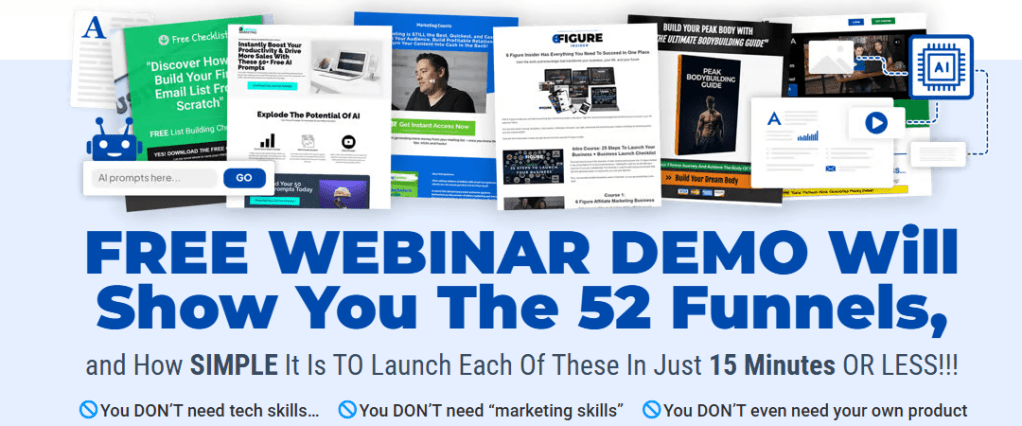
Get 52 free digital products here (All Including The FINISHED Products, Salesletters, Upsells, Email Sequences Ads And More. Just change your payment link and keep 100% of the profits!)
The Molly Keyser Philosophy: Problem First, Product Second
Before we dive into why digital products dominate courses, let’s talk about what makes Molly’s approach so effective. She doesn’t start with “What do I want to teach?” She starts with “What problem is keeping my ideal client up at night?”
This is the foundation of her Freedom Creator Framework—a system built on solving painful problems for people who desperately want solutions. Not people who casually want to learn something. People who are actively searching for answers right now.
Here’s what separates Molly’s strategy from the noise:
- She uses customer language, not expert jargon. When your audience says “I can’t figure out how to get my first 1,000 YouTube subscribers,” she doesn’t translate that into “YouTube Growth Masterclass.” She speaks their language.
- She focuses obsessively. Molly famously created over 100 digital products early in her journey. But her breakthrough didn’t come from variety—it came from focus. One problem. One solution. One irresistible offer.
- She builds trust before asking for commitment. Digital products are her trust-building machine. They let people experience her expertise without the intimidation of a $1,000 course purchase.
This philosophy is why digital products work so well for her audience—and why they’ll work for yours too.
Why Digital Products Win (And It’s Not Even Close)
Let’s get tactical. Here’s why digital products beat courses almost every time, especially when you’re building your business.
1. Speed to Market Crushes Perfection
Creating a course is like building a house. You need a blueprint, materials, contractors, inspections, and months of work before anyone can move in.
Creating a digital product is like setting up a tent. You can have it up and functioning in days, not months.
Molly’s $500K eBook didn’t take six months to create. It took her a fraction of that time because she wasn’t building multiple modules, recording hours of video, or setting up community forums. She identified one painful problem, created a focused solution, and shipped it.
The reality: Your audience doesn’t need perfect. They need solutions now. Digital products let you validate demand fast, iterate quickly, and start generating revenue while course creators are still outlining Module 3.
2. Lower Barriers Mean More Sales
Think about your own buying behavior. What’s easier to say yes to: a $59 eBook or a $997 course?
Digital products are low-commitment entry points. They’re the appetizer that makes people excited for the main course. Molly understands this deeply—her digital products aren’t just revenue generators; they’re trust builders.
When someone buys a $59 guide and gets massive value, they think, “If this is what I get for $59, imagine what her premium offer must be like.” You’ve just turned a stranger into a warm lead who’s already opened their wallet for you.
The reality: Most of your audience isn’t ready to invest $1,000+ in a course from you yet. But they’ll absolutely invest $50-$200 in a digital product that solves a specific problem. Once they see results, they’ll come back for more.
3. The Value Ladder Is Your Best Friend
Molly doesn’t just sell one thing. She builds a value ladder—and digital products are the crucial bottom rungs.
Here’s how it works:
- Free lead magnet (builds email list)
- $59-$199 digital product (creates customers and proves value)
- $500-$1,000 course or program (for people who want deeper support)
- High-ticket coaching (for your most committed clients)
Most creators make the mistake of starting with the course. They spend months building something expensive that nobody knows them well enough to buy yet.
Molly did it differently. She used digital products to build an army of satisfied customers who already trusted her expertise. By the time she offered anything premium, she had thousands of people who had already experienced her value.
The reality: Digital products aren’t instead of courses—they’re the bridge to courses. They fund your business while building the audience that will buy your premium offers later.
4. Pure Profit, Zero Overhead
Let’s talk about Molly’s $500K eBook again. Know what her overhead was? Essentially zero.
No video production costs. No software subscriptions for hosting course content. No community management. No student support tickets asking how to access Module 4.
She created it once, and it sold over and over again with near-100% profit margins.
Compare that to a course:
- Video editing and production
- Course platform fees ($100-$300/month)
- Email sequences and automation
- Community management tools
- Time spent answering questions and supporting students
- Regular content updates as platforms and strategies change
The reality: Digital products are infinitely scalable with minimal ongoing costs. Every sale is almost pure profit, and you’re not trading your time for student support.
The Course Trap: Why More Isn’t Always Better
Don’t get me wrong—courses have their place. But too many creators fall into the course trap before they’re ready.
The Production Time Sink
Creating a comprehensive course can take 3-6 months or longer. That’s months of not earning revenue, not validating your offer, and not knowing if anyone actually wants what you’re building.
Molly’s approach? Create a digital product in weeks, sell it, use the revenue and feedback to fund your next move. If demand is there, scale up. If not, pivot quickly without losing months of your life.
The Overwhelm Factor
Course completion rates average between 5-15%. Yes, you read that right. Most people who buy courses never finish them.
Why? Overwhelm. Too much content. Too many modules. Too much commitment.
Digital products solve one specific problem. They’re consumable. People actually use them, get results, and come back for more. That’s why Molly’s products work so well—they deliver quick wins, not overwhelming content libraries.
The Support Burden
Every course student is a relationship. They’ll have questions. They’ll need help. They’ll email you at 11 PM wondering why they can’t download the bonus worksheet.
Digital products? You sell them, people download them, and they use them. Done. Your time is yours again.
The reality: Courses require ongoing time investment even after you create them. Digital products are truly passive once they’re built.
Molly’s Proven Digital Product Strategy (The Playbook)
So how do you actually do this? Let’s break down Molly’s strategy into actionable steps.
Step 1: Identify ONE Painful Problem
Not three problems. Not “everything you need to know about X.” One painful, specific problem that’s keeping your ideal client up at night.
Molly’s advice: Listen to your audience’s actual language. What phrases do they use? What’s the exact problem they’re describing? Use those exact words in your product positioning.
Step 2: Create a Quick-Win Solution
Your digital product should deliver a specific result. Not “learn about YouTube growth”—instead, “Get your first 1,000 subscribers in 90 days using this exact strategy.”
Quick-win formats that work:
- Templates and swipe files (done-for-you resources)
- Checklists and frameworks (step-by-step systems)
- eBooks and guides (focused how-to content)
- Workbooks (interactive problem-solving tools)
The key: Make it something people can implement immediately and see results from quickly.
Step 3: Build Your Email List First
Molly didn’t build her $500K eBook success by hoping people would stumble upon it. She built an email list of people who already knew they had the problem her product solved.
Create a strategic freebie that attracts your exact ideal customer, then nurture that relationship. When you launch your digital product, you’re selling to people who are already warm and engaged.
Step 4: Let Products Fund Your Next Move
Here’s the beautiful part: Every digital product sale is research and funding combined.
If your $97 guide on email marketing sells 500 copies, you’ve just made $48,500 AND validated that there’s demand for more advanced email marketing solutions from you. Now you have the revenue and the proof of concept to create something bigger.
Step 5: Focus Beats Variety Every Time
Remember Molly’s 100+ products? That was the learning phase. Her breakthrough came from focus—doubling down on what worked rather than constantly creating new things.
Don’t make 50 mediocre products. Make one exceptional product that solves one painful problem better than anything else out there. Then make the next one.
The Path Forward: Digital Products First, Everything Else Later
If you’re sitting on a course idea right now, I want you to pause and ask yourself: “Could I solve this as a digital product first?”
Could your 8-module course become an implementation guide? Could your comprehensive program become a framework workbook? Could your masterclass become a strategic template pack?
Molly Keyser’s success isn’t about choosing digital products over courses forever. It’s about being strategic with your sequence. Digital products build your audience, prove your value, fund your business, and create customers who trust you.
Then, when you’re ready to create a course, you’re not creating it for strangers. You’re creating it for people who have already bought from you, gotten results, and are eager for more.
That’s the difference between hoping people will buy your $1,000 course and having a waitlist of people begging you to take their money.
Your Next Step
Start with one painful problem. Create one focused digital product. Sell it to your warm audience. Use the revenue and feedback to build what’s next.
The freedom you’re chasing doesn’t come from building the perfect course. It comes from creating strategic digital products that solve real problems for real people who are actively looking for solutions.
Molly Keyser proved this with a $59 eBook that generated over half a million dollars.
What’s your $59 eBook going to be?
refernce https://claude.ai/public/artifacts/bd48d5fc-d6d3-4f08-ba2e-41408d6bc136
 Hove44
Leave a comment